“ASL Club is a place to come learn from others and involve yourself in a culture or community that may be different from your own,” American Sign Language Club co-president Danijela Gallo said.
ASLC strives to raise awareness about deaf culture and sign language itself through weekly meetings. They build awareness about the deaf and hard-of-hearing community because people often don’t know about it or how to communicate with them.
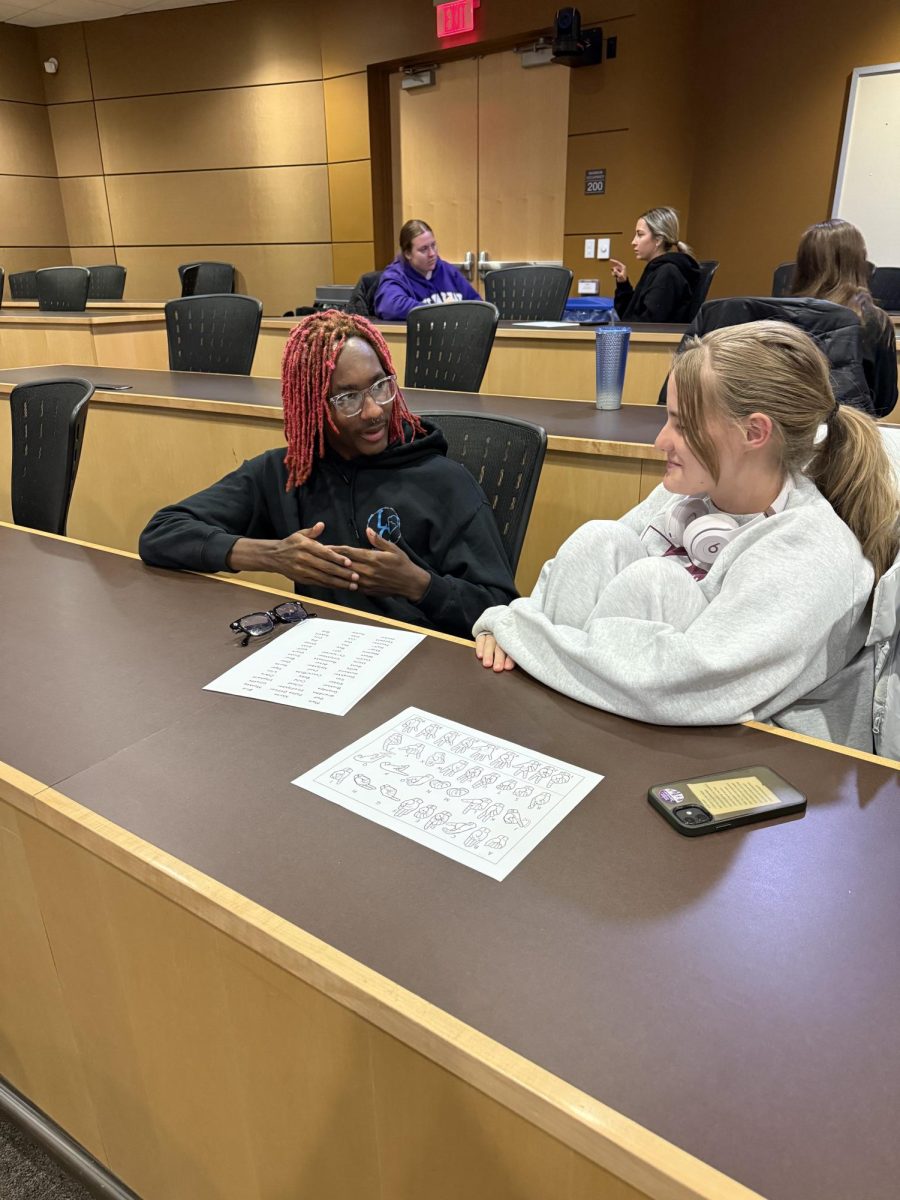
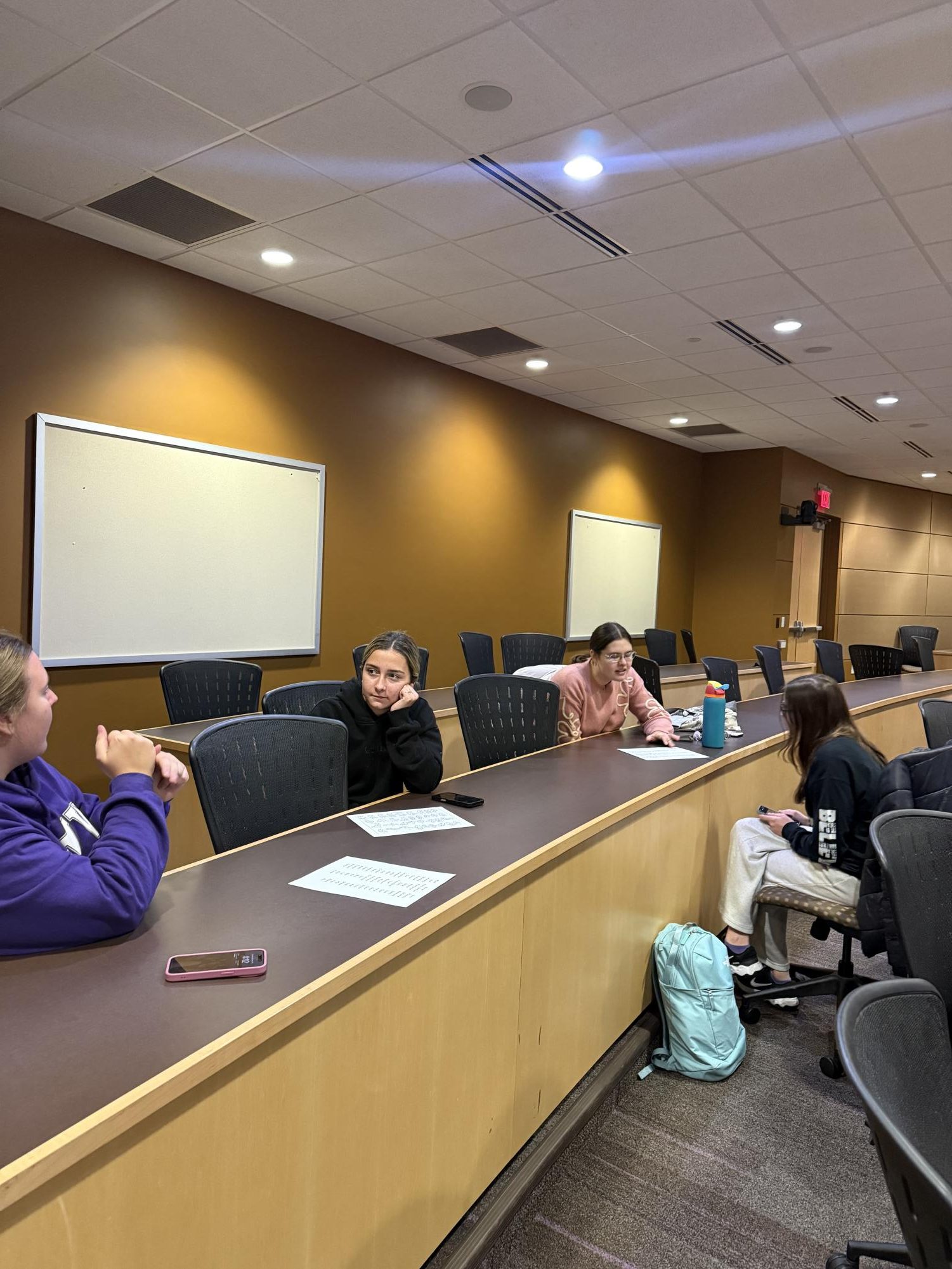
At ASLC, members learn how to approach and interact with people who are deaf or hard of hearing. The club focuses on hands-on activities. Each week, they cover a specific topic and learn the sign language related to it. They also concentrate on using only sign language during meetings, temporarily setting aside spoken voice. Meetings typically involve review, introducing new words, practicing together and ending with a game to test what they’ve learned.
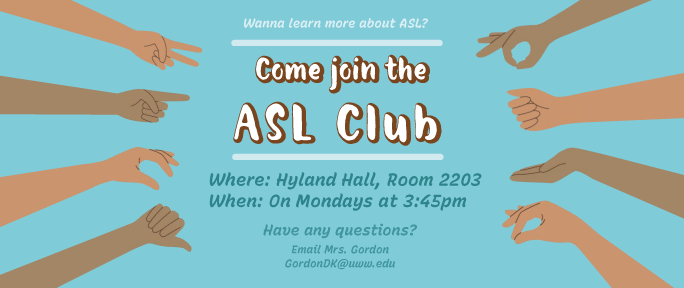
The club has created numerous posters to promote these activities. They are also active on Instagram, maintain an email list for interested individuals and send weekly emails announcing the club’s weekly meetings. Along with posting videos of the sign language they practiced for those who could not attend the meeting.
What ASLC aims to achieve is greater awareness. Hannah Paszkiewicz, co-president of ASLC, expressed the meaning of participating in ASLC.
“Being able to join the club and kind of get a different side of it from what an academic class was like was really interesting,” Paszkiewicz said.
Members meet diverse people with varying levels of ability in this club. They learn to communicate with these individuals and accept each other as they are. Beyond that, members learn a great deal regardless of someone’s disability or ability.
Owen Seaver, a club member, said his “ultimate goal is just to keep my signing skills up and stay fluent, but I think other people’s goals should be to learn about not only the language but also deaf culture and what’s appropriate for deaf people. I think if everyone learned sign language it would be great. It’s so useful, like if you’re in a crowded party room, you can talk to someone that’s across the room and also help out deaf people who don’t have as much communication ability.”
ASLC also advocated for reopening ASL courses. To achieve this, they circulated a petition, gathered enough signatures, and successfully reopened ASL 1 as a credit-bearing course this semester, taught by a deaf instructor. Next semester, students will be able to take ASL 2.
In this way, ASLC is promoting various activities for the Deaf community.
“If you don’t currently know someone who is deaf or hard of hearing or uses ASL, you never know when you might come across that, and like your little knowledge of ASL can help you have a conversation and like create that relationship between someone you don’t know, and you never know when that might like happen,” Paszkiewicz said.
Learning ASL means sharing the world and our hearts with the people we live alongside. Knowing ASL, learning from others and sharing that knowledge and understanding with each other is the first step in building a community.