As students walk across the University of Wisconsin-Whitewater campus after a snowfall, they’ll find places such as Lot 8 with about two inches of snow, or the walkway near Ma’iingan Hall with a buildup of ice. While these conditions may be inconvenient for some, they pose serious accessibility issues for certain students, such as wheelchair user freshman Alyah Reagles.
“A specific challenge arises during the major cleanup phase,” Reagles said. “While plows are effective at clearing the streets, they often push snow into the sidewalk curbs. These blockages can make crossing the road difficult or even impossible, leaving me with two tough choices: finding a significantly longer alternative route or risking getting stuck and hoping for assistance from another student. While wet and slippery surfaces still exist during the season, it still requires me to rely on my dear friends for help at times.”
As UW-Whitewater students and faculty such as Reagles identify these unsafe conditions, one question arises: why has it not been cleaned up? There is not one reason why walkways and roads remain uncleared. Instead, a combination of factors makes the snow and ice removal process a challenge.
Typically responsible for lawn care and capital equipment repair, the Buildings and Grounds department shifts to snow and ice removal during the winter months. In addition, an auxiliary team – made up of volunteer workers from other campus departments, like housing or the University Center — assists in the removal process.
“When classes are in session, we’re pretty much in here at 3 in the morning,” Building & Grounds Manager Joseph Post said. “We try to get everything at least a minimum of one pass by seven and then touch and go here and there.”
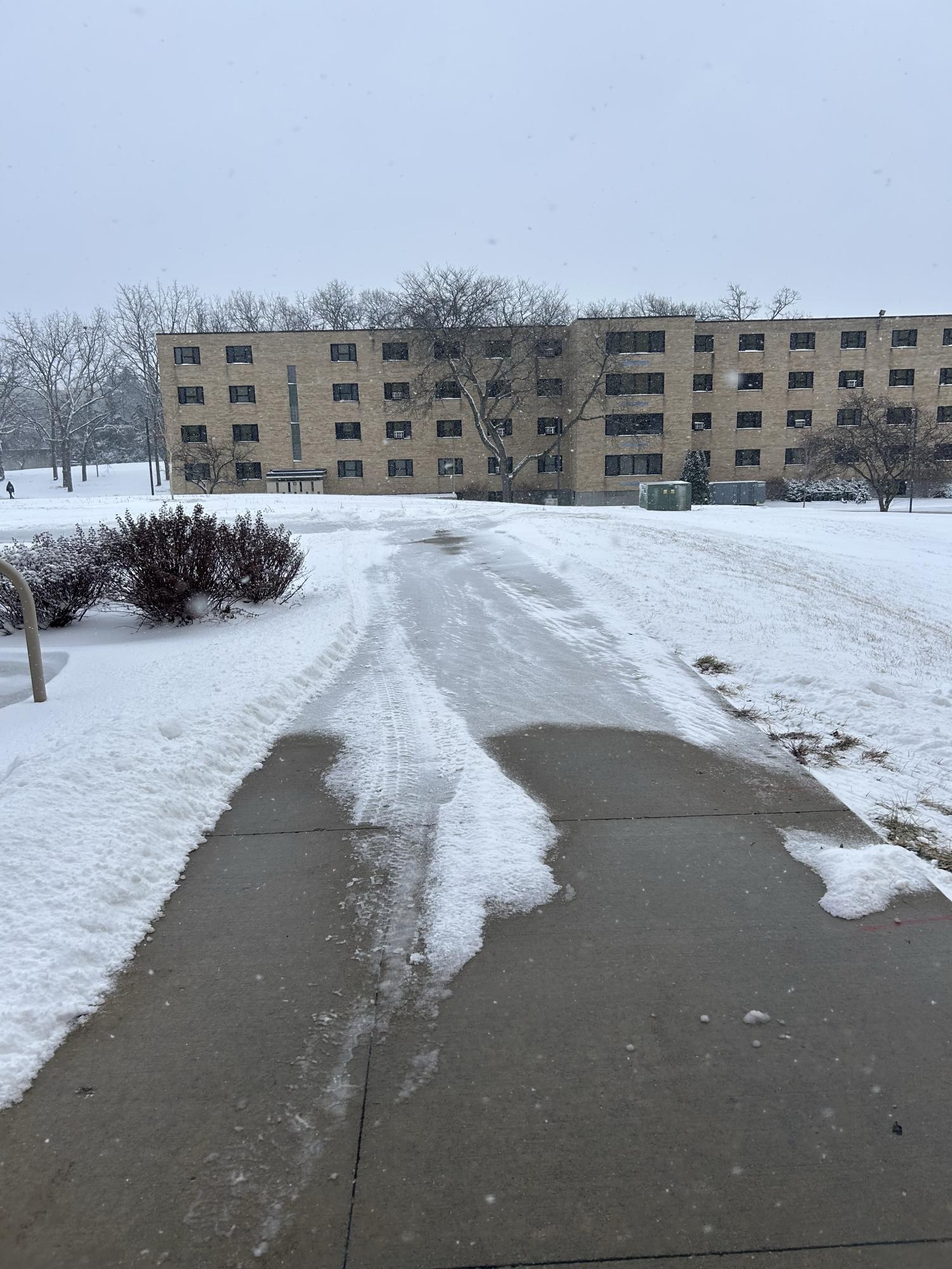
As Post described, the Buildings and Grounds and auxiliary teams begin their efforts ahead of the morning rush of students and faculty. However, starting so early is what introduces a challenge.
“None of our efforts really will do anything until the sun rises and there’s some solar reaction,” Vehicle Equipment Tech John Hoffmann said. “Please be patient. Let the stuff do its job and work. We get complaints while it’s still before sunrise that things are too slick out there. They want us to spread more salt. Well that goes against our stewardship, because we’ve applied enough salt for the conditions we have.”
The teams themselves are another concern. The grounds team consists of eight people, and the auxiliary team is another seven. However, it is not always the 15 people.
“We get less and less volunteers to be a backup, so if we have people out sick or people on vacation, then we have to shuffle around job duties and you might have an extra lot or two,” Building & Grounds Assistant Supervisor Russell Schmidt said. “We’ve been lucky to have a full crew this year, but it never seems like we have an over abundance of people who are jumping to hop in a plow truck at three in the morning.”
Parking has been a major issue on campus. With not enough parking spaces, some students and visitors opt to illegally park overnight in commuter or faculty lots south of West Starin Road. These vehicles create an obstacle for the snow removal crew.
“You’ll have visitors from out of town that are coming to visit people that surround campus, and they can’t park where they’re visiting because they don’t have a parking pass for that apartment building,” Hoffmann said. “So, they park out in front of the Center of the Arts, or they park in the lot behind. They’re right in the middle of our work zone. To be able to clear that parking lot, we end up having to plow around them. Then we have to come back later after they leave and replow the lot again.”
Despite the logistical problems that the snow removal teams face, its workers care about keeping campus safe.
“If you see us out working, know that we’re doing our best, know that we care about the staff and students and employees of this university, and to please be patient,” Schmidt said.