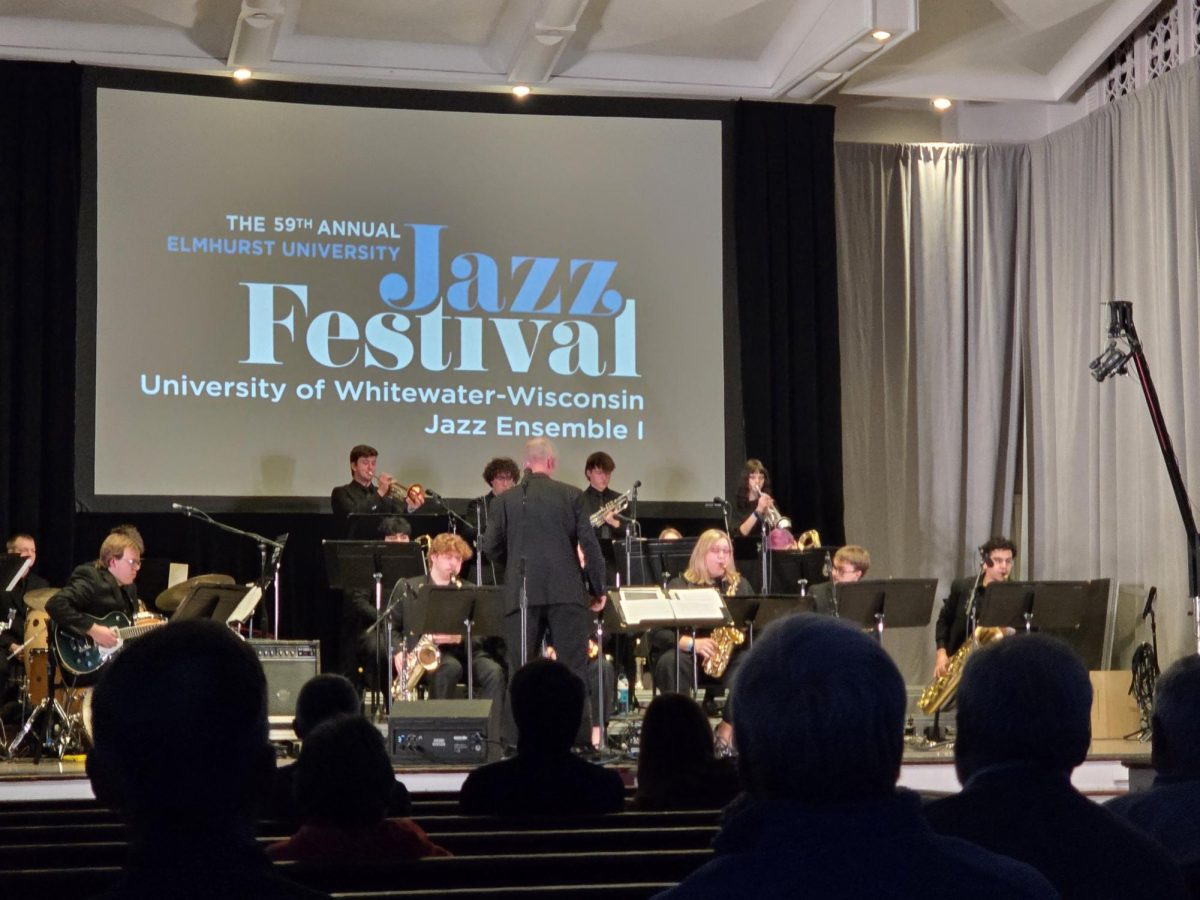
As the first notes filled the Hammerschmidt Memorial Chapel in Elmhurst, Illinois, Feb. 27, the moment carried more than just a melody. For the women on stage, the performance represented something larger, undiscussed and often unnoticed: an opportunity to perform in a genre that has not always made room for them.
Jazz has long been celebrated for its improvisation and innovation, yet historically the spotlight has often centered on male performers. While women have always been part of the genre’s foundation, from pianists and vocalists to instrumentalists, they have frequently been outnumbered in ensembles and overlooked in recognition. Performances like the one in Elmhurst show that landscape is slowly changing, even if the imbalance has not fully disappeared.
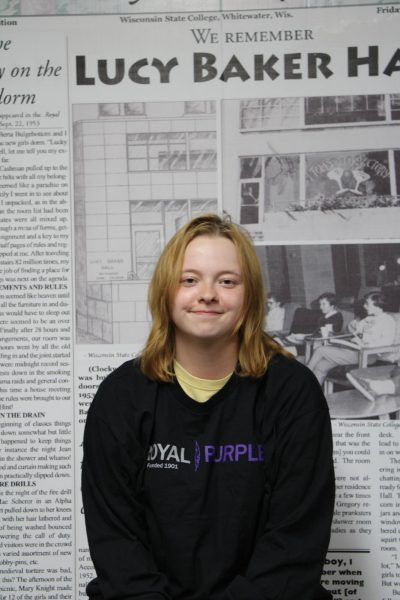
Bass guitarist Savannah Grachek knows that reality firsthand. Grachek, now a freshman at UW-Whitewater who performs in both Jazz II and Combo II, has been involved in jazz since middle school. She originally started on flute before switching to bass during her sophomore year of high school, a move that placed her even more firmly in the rhythm section, one of the most male-dominated spaces in many jazz groups.
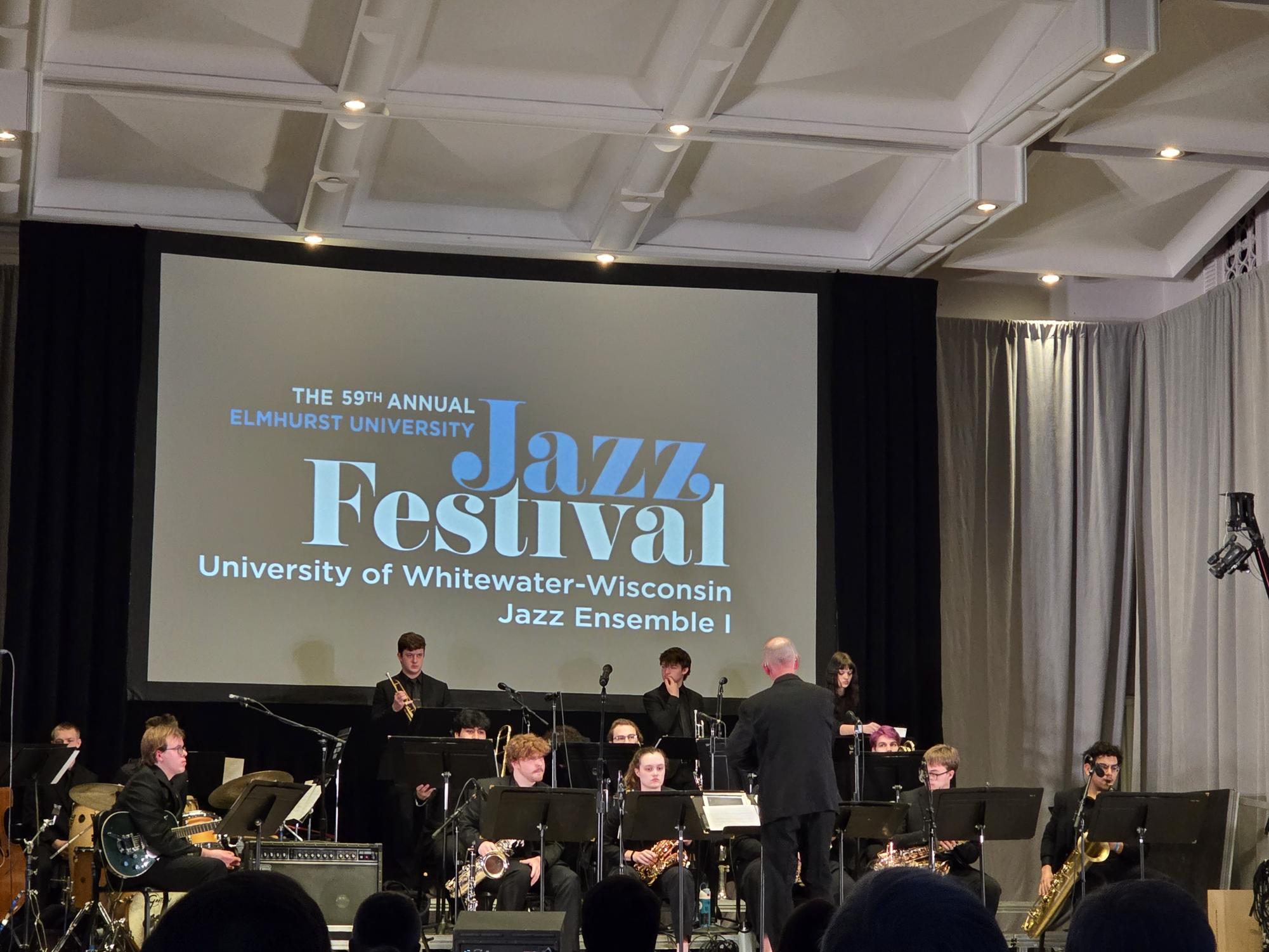
“College is the first time I’ve ever had more than one other female in a group with me. You could always see there were more men in our jazz group during high school,” Grachek said. “Even now, there are still less women in our jazz groups here.”
Despite the imbalance, these opportunities signal meaningful progress. For many student musicians, traveling performances are both milestones and moments where rehearsal rooms turn into real audiences. For Grachek, the trip carries both excitement and a sense of possibility.
“I think performing at Elmhurst is a very exciting experience and opportunity,” Grachek said. “I have never experienced something like it, so I look forward to traveling somewhere to perform with other jazz groups.”
Beyond just the travel and the music, the experience also reflects something more personal: visibility. Simply being on stage can carry weight in spaces where representation has historically been limited.
“To take up space on stage as a woman, to me, means that I have the privilege to share my passion with others no matter our differences otherwise,” Grachek said. “I think getting on stage is a safe space for me. While I perform, I am focused on the flow of the music from within myself and I get into the zone.”
As younger musicians look toward jazz, Grachek hopes the path continues to widen.
“My advice to girls who want to pursue jazz is to go for it,” Grachek said. “No matter how bad or great you think you are, put yourself with musicians who are better than you, and you will learn. Challenge yourself and never let anyone get you down. You are meant to be there.”
While the gender gap in jazz has not fully closed, performances like this one suggest the stage is slowly moving toward a space for everyone. Every set, solo and shared stage pushes that progress forward, one note at a time.