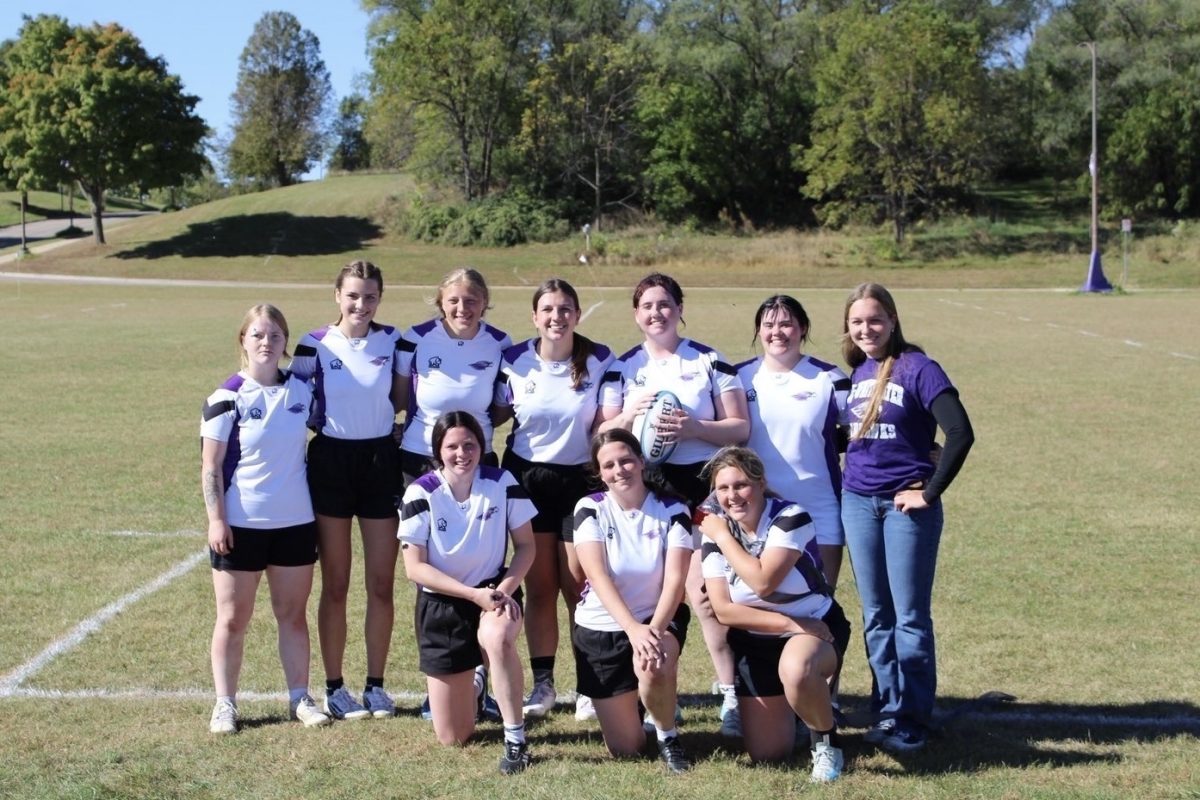
Ever since the early 20th century, sports that were historically dominated by men slowly reshaped year-after-year as more women stepped into organized athletics and recreational sports leagues.
Despite growing participation and women becoming more accepted in recreational sports, female athletes note that outdated perceptions still shape how others view them.
“I feel like most people [who] see a girl playing rugby are like, ‘Oh, she’s got to be super masculine or something and be super tough,’” said Autumn Turner, who plays club rugby at UW-Whitewater. “It’s not about caring about how they think of you; just knowing yourself more instead.”
These assumptions can vary, but most of them tend to align with a belief that female players aren’t as fast, aren’t as strong or are less emotionally equipped for the intensity of competition compared to males. However, those assumptions are typically shattered not long after the player enters the playing field, showcasing their well-trained skills and the team’s strong dynamic.
Even if the players are not able to showcase their skills immediately, they push past the assumptions and stereotypes, using them as motivators to prove them wrong.
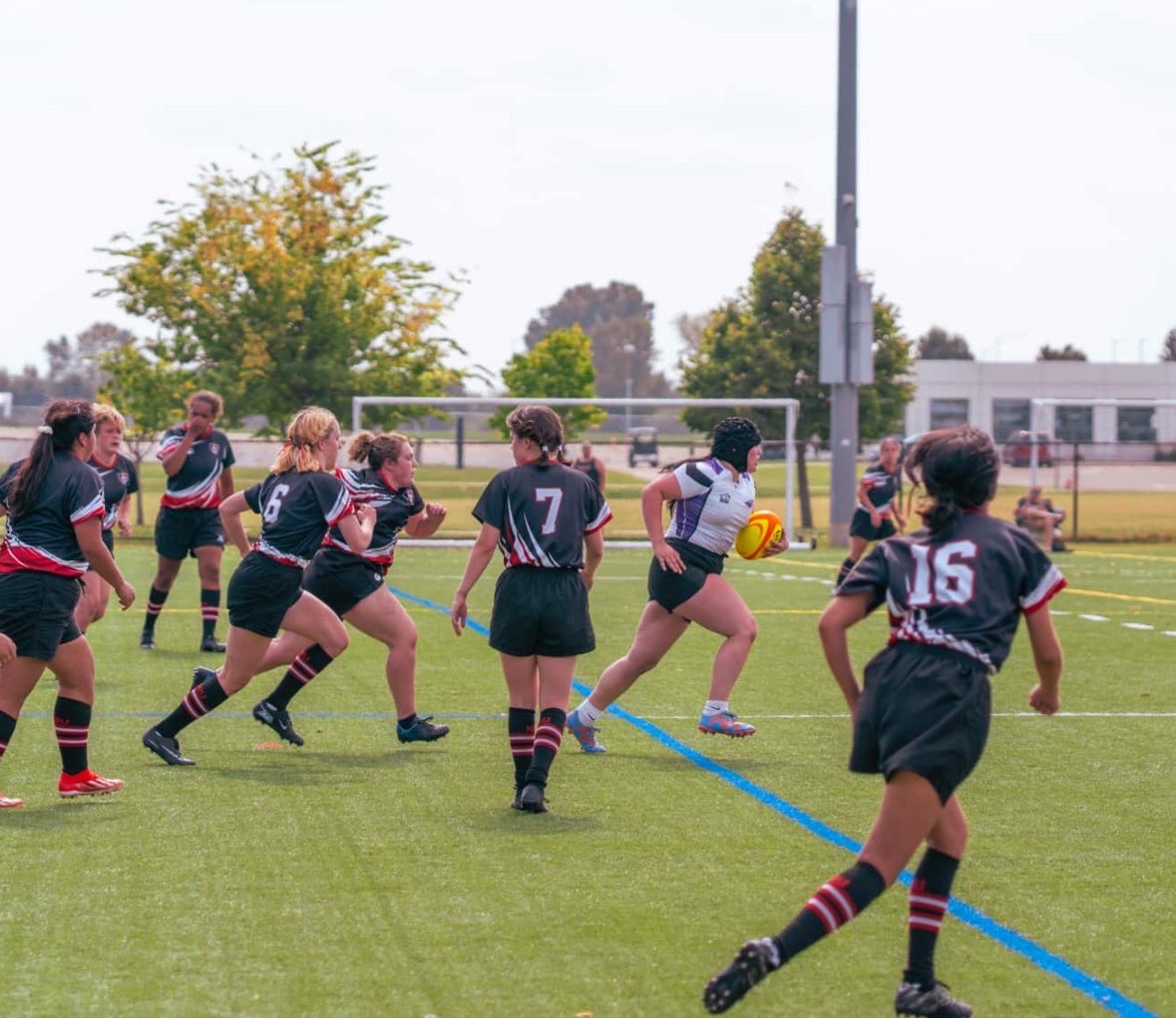
“It’s not as much being strong in the physical sense, which it is, it also includes being strong in the mental sense,” club rugby player Sabrina Barrett said.
In some sports, such as lacrosse, the rules and equipment differ between women’s and men’s versions. While men’s lacrosse has fully padded helmets and is allowed to make physical contact against their opponent, women’s lacrosse has only goggles and a mouthguard, with no contact. While these variations reflect safety priorities, they require athletes to adapt their strategies and emphasize specific technical skills.
“While the sport may be played differently, no matter what sport it is for guys and girls, I think it’s equally as intense, interactive and competitive,” women’s lacrosse president Aubrey Spaulding said.
She noted that women’s lacrosse has to put more of an emphasis on their technical skills and team dynamics, which makes it a bit more challenging than men’s lacrosse.
In women’s club sports, their male counterparts often receive more equipment and a higher field priority. Another issue that women’s recreational sports encounter is getting interested players to join. However, the women’s clubs find a way to work through these obstacles, such as setting goals during practices and spreading the word through social media, involvement fairs, flyers or word of mouth.
Year after year, participation begins to grow in women’s recreational sports, reflecting how much the negative connotations of women in sports have been dismantled and changed since the 20th century.
As participation continues to grow and assumptions continue to linger, women players still push through. For them, their team becomes a second family, and the time is spent fostering that relationship while playing a sport that they all passionately enjoy; continuing to improve their skills, battling stereotypes and creating core memories.
“It doesn’t matter if we express our feelings through crying or anger,” women’s club volleyball president Josie Starin said. “We’re as passionate as the guys; maybe we just show it in different ways.”