

Assistant Professor of Flute Brandon LePage started at UW-Whitewater only a year ago. Although he may be fresh to the campus, he has already fostered connections with his students and grown a fondness for the community.
Before UW-W, LePage taught at Oakland University in Rochester, Michigan, and served as the principal flutist for the Wisconsin Chamber Orchestra. His role with the orchestra factored into his decision to apply to UW-Whitewater; while living in Michigan, LePage spent much of his time traveling to perform.
“I’ve been driving in and out of Madison for about a decade to play with the orchestra,” LePage said. “I was reaching a point where either I needed to be all here or all there. I was quite relieved when this job came open because it gave me a path to move where I really wanted to be.”
Growing up in an artsy family, LePage’s parents were excited to see his interest in playing flute and provided him with the resources he needed to pursue a music career. The idea of teaching had not crossed LePage’s mind until his professor and doctorate validated the path.
While LePage grew accustomed to the new workload and environment of UW-W, he was quick to connect with colleagues and his students. In private lessons, he is able to individualize his teaching to the particular student in a way that benefits them the most. Often, LePage tries to find a way where instead of outright giving the answer to any problem the student encounters, he finds a way to provide the student with the tools for them to try and fix the problem themselves. This teaching style helps the students foster the skills they will need in the future. Afterwards, if the student does not find a resolution, only then will LePage mediate.
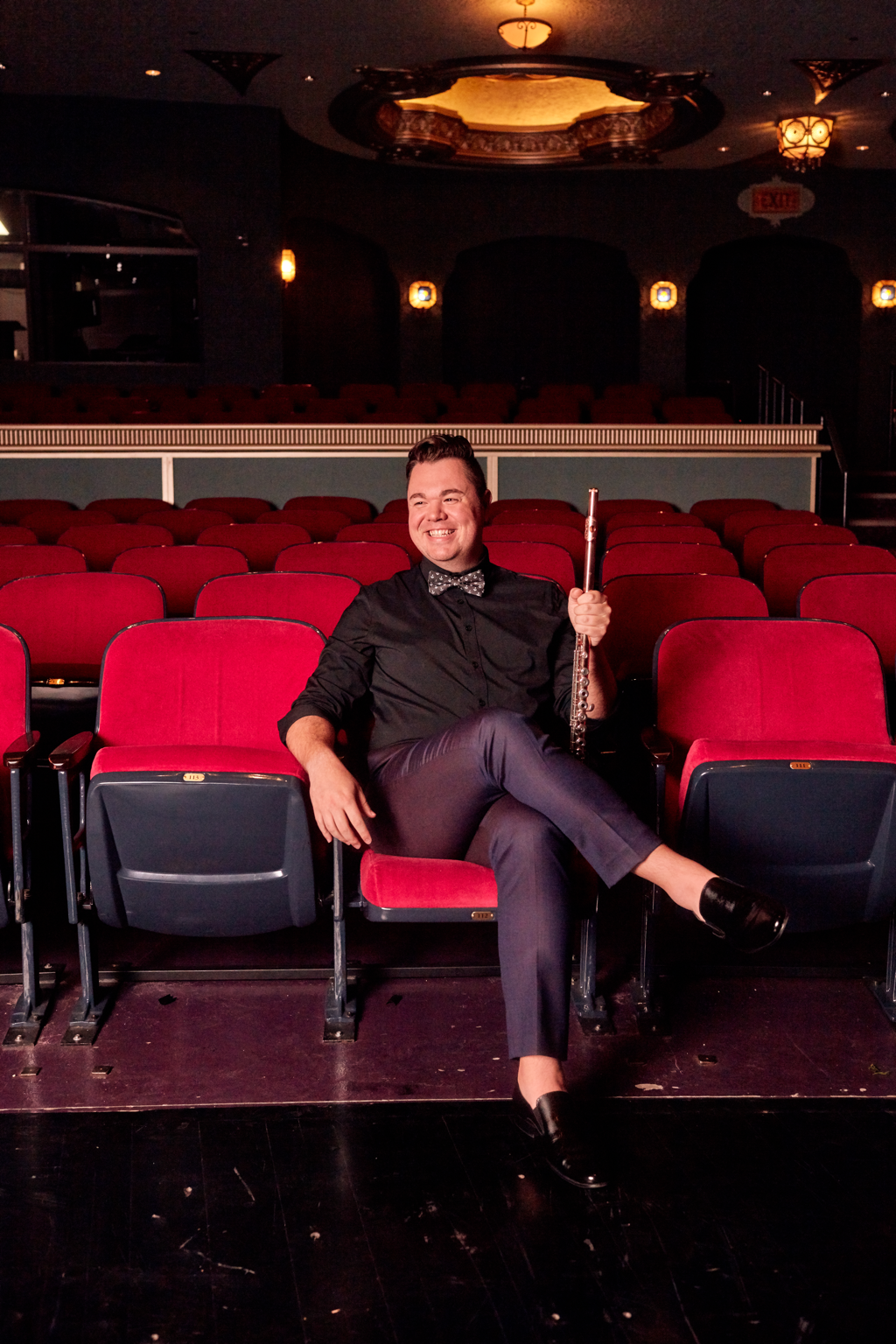
With his students, LePage’s goal is to highlight the importance of finding a process that best works for them. With people coming from various backgrounds on campus, everybody has an individualized process that works for them. Although the process is important, LePage wants his students to look back at how the music made them feel.
“A lot of the student body here, the lived experiences that they’re bringing in with them are very different from the kinds of students that I was engaging with before, or my own lived experience, and I love that,” LePage said.
For his upperclassmen, LePage turns his focus from tone production and technique to answering questions about the piece: Who is this composer and what are they writing? What shapes and emotions does the piece evoke? How do you, the player, feel?
“My goal by the end of the degree is that I have a good musician, not just a good flute player,” LePage said. “It’s easy to make music without emotional depth. But that won’t last, and that can’t make a career either.”
