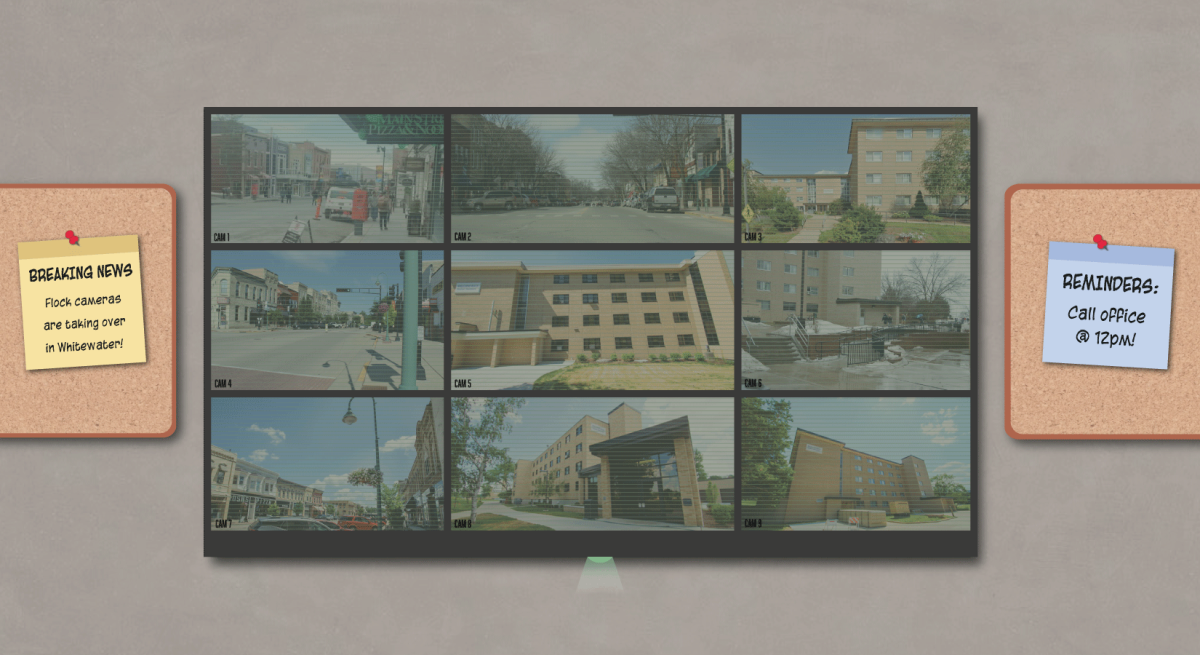
As the Whitewater Police Department expands its use of license plate reader cameras, two sides have formed: city officials, who say the technology is a powerful crime-fighting tool as well as the residents and critics that are raising questions about how the data is used, who can access it and what safeguards are in place.
At the center of the debate is the city’s use of 13 Flock cameras, which cost about $39,000 annually. These cameras capture images of the rear of vehicles, including license plates, make, model and color. This data is then stored for 30 days before being permanently deleted and unrecoverable.
Police Chief Daniel Meyer said the cameras have become one of the department’s most effective resources.
“These cameras have been one of the most powerful public safety tools that we have,” Meyer said. “Removing them would undoubtedly make this community less safe.”
For law enforcement, the appeal of these cameras lies in speed and reach, allowing officers to quickly identify vehicles connected to crimes.
The cameras are integrated with national systems, including the National Crime Information Center and the National Center for Missing & Exploited Children. If a stolen vehicle or car is linked to a violent crime and passes through Whitewater, officers can be alerted within seconds. Officials say the technology has already proven its value.
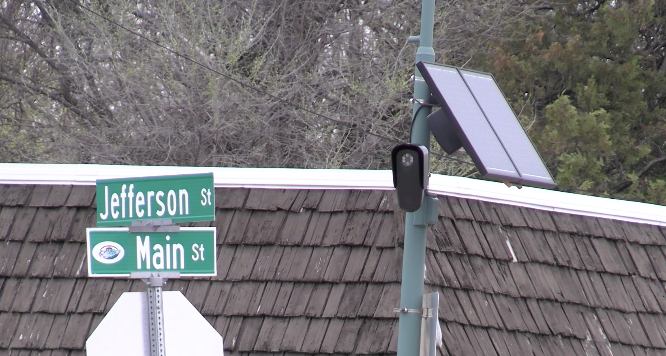
In one case, the Flock system alerted officers that a driver out of Waukesha wanted for domestic abuse, battery and strangulation had passed through Whitewater. Flock alerted officers that the individual was allegedly armed, and officers were able to locate the vehicle and take the suspect into custody. In another case, the system helped identify a vehicle connected to a shooting out of Beloit, leading to an arrest and the vehicle was turned over to the Beloit Police Department.
While the police department emphasizes the system’s effectiveness, city officials explain the system’s technicalities. City Manager John Weidl said that the city uses a structured framework to balance privacy concerns along with public safety needs.
“The system functions as a targeted investigative tool rather than a form of continuous surveillance,” Weidl said, noting that the department limits use to legitimate law enforcement purposes and requires documented justification for searches.
Supporters argue that this kind of data sharing is essential for modern policing, where suspects often move quickly by vehicle across city and county lines.
The system’s ability to store and search vehicle data gives investigators a timeline, showing where the car has been and the exact time it was located.
Officials emphasized that the system cannot search for people by name or address. Before acting on a “hit,” officers must independently verify the information and establish probable cause, such as confirming a license plate through dispatch.
Despite limitations within the Flock system, critics say the technology still raises significant privacy concerns.
“Our agency currently shares and receives Flock camera data with all state and local law enforcement who request it,” Meyer said. “We believe that information sharing is what makes the system so valuable as an investigative tool.”
While each request is reviewed, data collected in Whitewater can be requested for access by other agencies across the state.
Critics argue that even without facial recognition, the system creates a searchable record of people’s movements based on their vehicles. Others expressed concern about who that data could eventually reach.
“These cameras are monitoring every detail they can about passing vehicles. The model, color and stickers are all going into a searchable database that can be accessed without a warrant by police across the country, and it has been accessed by federal agencies such as Customs and Border Protection,” Fort Atkinson resident Calvin Fisnik said.
Some concerns go beyond what the system is capable of now, and focus on how it could be used in the future.
Fisnik pointed to a documented case in other parts of the country where law enforcement officers have misused the license plate reader system to track individuals for personal reasons.
Flock Safety representative Kristen MacLeod said the company has taken steps to address those risks. Each search in the system now requires users to select a specific offense type from a standardized list, creating a reason for why the search was conducted.
Officials maintain that the system is non-invasive and note that all data collected in Whitewater is owned by the city and cannot be sold. But for some residents, the issue is not just policy; it’s trust.
“I don’t feel like I’m much safer than I was before,” Whitewater resident James Hartwick said. “What I’m really worried about is the partners that we give this data to.”
For now, officials say the system is limited to vehicle data. As Whitewater continues to rely on the technology, the debate reflects a broader question facing communities across the country: how to balance faster, efficient policing with concerns about privacy, oversight and public trust.