

From creating an hour and a half long documentary on a two-week long stormchasing course to gathering distributional data for the mayflies species throughout all of Wisconsin, the scope of Undergraduate Research, Innovative, and Creative Activities (URICA) project is wider than ever.
This scope was in part supported through the University of Wisconsin-Whitewater commitment to URICA for the 2025-26 academic year through additional funding and expanded institutional backing.
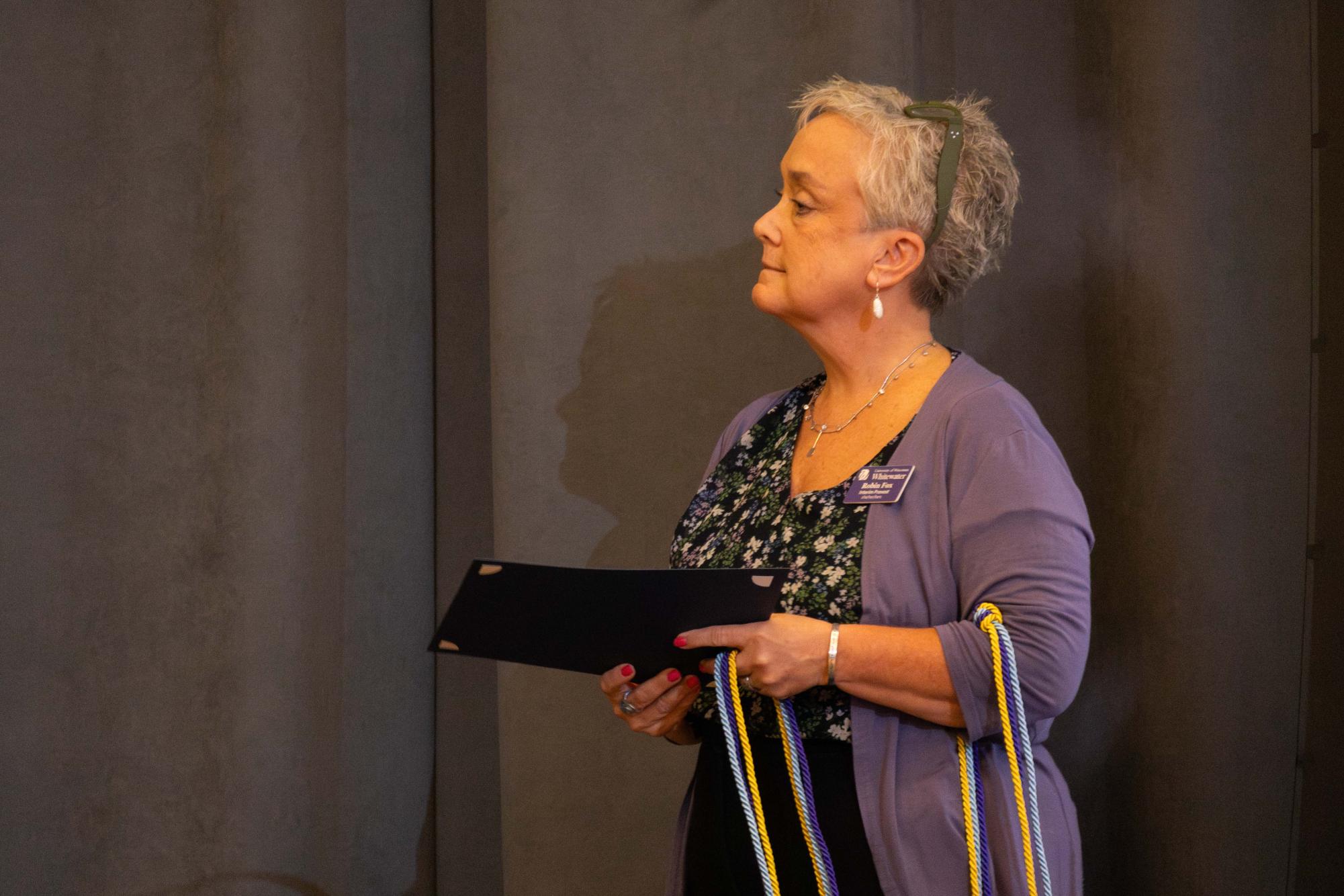
From URICA Director John Frye’s perspective, the university’s increased focus on undergraduate research began to take shape following the March 2025 Research in the Rotunda. During the event, Chancellor Corey King met with student researchers who were later invited to lunch and had the opportunity to further discuss their research and hear from faculty mentors. Later that month, Frye, King and Interim Provost Robin Fox met to formalize the university’s support for the program.
In addition to regular annual funding, URICA was allocated $90,000 from campus reserve funds. King said this funding increase was to expand the number of student researchers and faculty mentorship. That increase was reflected during the April 23 Spring Symposium, where two University Center rooms, the Hamilton Room and Old Main Ballroom, were used for posters instead of the one used in the past. This funding also allows the program to expand its Summer Research Fellowship projects. In previous years, the program could only fund three proposals; that number has risen to five or six.
While the increased funding supports expanded opportunities for URICA, university leaders have increased the program’s recognition through verbal support. During the Fall Undergraduate Research Day and Spring Symposium, King and Fox praised students’ work. They recognized that projects were not bound by the university’s walls, instead bringing value to their respective fields. This recognition, according to Associate Director Brian Schanen, serves more than just student encouragement.
“The comments from the provost and the chancellor really help to embrace to the students, ‘Hey, undergraduate research is important. Take a look at this program,’ but also for potential mentors to say, ‘This is a place you could look to work with students and further that impact,’” Schanen said. “One thing leads to the next and suddenly they’ve got a project.”
As a “high impact practice,” the university’s investment into undergraduate research is tied to a broader emphasis on student outcomes, both in and out of the classroom, ranging from retention to career opportunities. For students currently involved in the program, that emphasis is reflected in how they approach learning.
“I think universities primarily have two functions,” senior Ian Cooper said. “One is to teach people and educate them. The second is research. And I think you can’t do either of them well without the other. If you don’t have a passionate campus base of people who are going out of their way and learning more than the classes, then I don’t think you’re gonna produce the most productive students out of it. So to have that campus community of self learners and motivated people, I think research needs that funding.”
The 2025-26 academic year marked many accomplishments for the URICA program, including a record number of posters at the Spring Symposium and participation from every undergraduate college. These accomplishments reflect sustained student and faculty engagement with additional support from the university to help grow the program. Ultimately, the program’s growth is with one goal in mind: aid students.
“[Students] leave us with a degree and the ability to solve problems that may not even exist yet,” King said. “To that end, we want to ensure that every student, regardless of their major or background, sees themselves as a researcher.”
