Controversy over city-backed financing for the Stonehaven Development project on Bluff Road was on display during the April 20 Special Common Council meeting. The April 21 regular Common Council meeting marked the first meeting with newly elected and reelected aldermen and included discussion of city property use by non-profit organizations.
In August 2025, the Common Council approved the sale of two parcels for Stonehaven Development’s 14 modular single-family homes along Bluff Road. Stonehaven is targeting home prices around $330,000, with a maximum sale price of $350,000. City Manager John Weidl said it is a lower price than other newly built single-family homes in Whitewater. This project, however, has raised community concerns regarding how the city is financially supporting the development.
To finance this project, Stonehaven proposed the creation of a short-term Revolving Loan Fund. The city structured the fund as an interfund loan using the Wastewater Utility Fund. Tax Increment District (TID) 11 would repay the full amount with a 3.5% interest rate — the same return the funds were already earning in reserve. The city would then pay Stonehaven’s contractors directly to ensure the funds were used appropriately. As homes are completed and sold, the proceeds would return to the fund, helping offset how much TID 11 would owe back to the Wastewater Utility Fund.
This financing structure drew strong criticism from residents and council members, who argued the city would be taking on too much risk for a private developer.
“I do not believe that risking utility funds for this project is an appropriate use of ratepayer dollars,” District 4 Alderman Brian Schanen said. “For that reason, I’ll be voting no on any proposal that uses Wastewater Utility funds for housing development. I believe strongly that utility funds are enterprise funds intended specifically for maintaining critical infrastructure. This proposal introduces market risk that falls outside the core mission of the Wastewater Utility, providing safe, reliable service.”
As confirmed through the Comprehensive Plan updates in the April 21 meeting, one of the largest concerns the community has is the lack of affordable housing. With a limited number of homes on sale and city officials hoping to attract more residents, Community Development Director Mason Becker argued the Stonehaven project addresses the housing shortage, one the city has no alternative to. Becker said that projects like these help prevent population decline.
“As someone in economic development, I would tend to lean toward that [population decline] is probably a bad thing,” Becker said. “That means our tax base is going to shrink. Our essential services will be more expensive to deliver. Our employers are going to have a tougher time finding employees.”
Community members proposed alternative solutions ranging from direct subsidies for buyers to contracting local developers, such as Tanis Construction, to build new homes. But ultimately, the “Development Agreement for Stonehaven Development on Bluff Road” and “Resolution to approve borrowing from City of Whitewater Wastewater Utility for Stonehaven Development Project” items passed with only Schanen and District 1 Alderman Michael Smith voting against both items.
The April 21 meeting included swearing in elected and reelected members and discussion on whether the city should charge non-profit organizations who use city spaces.
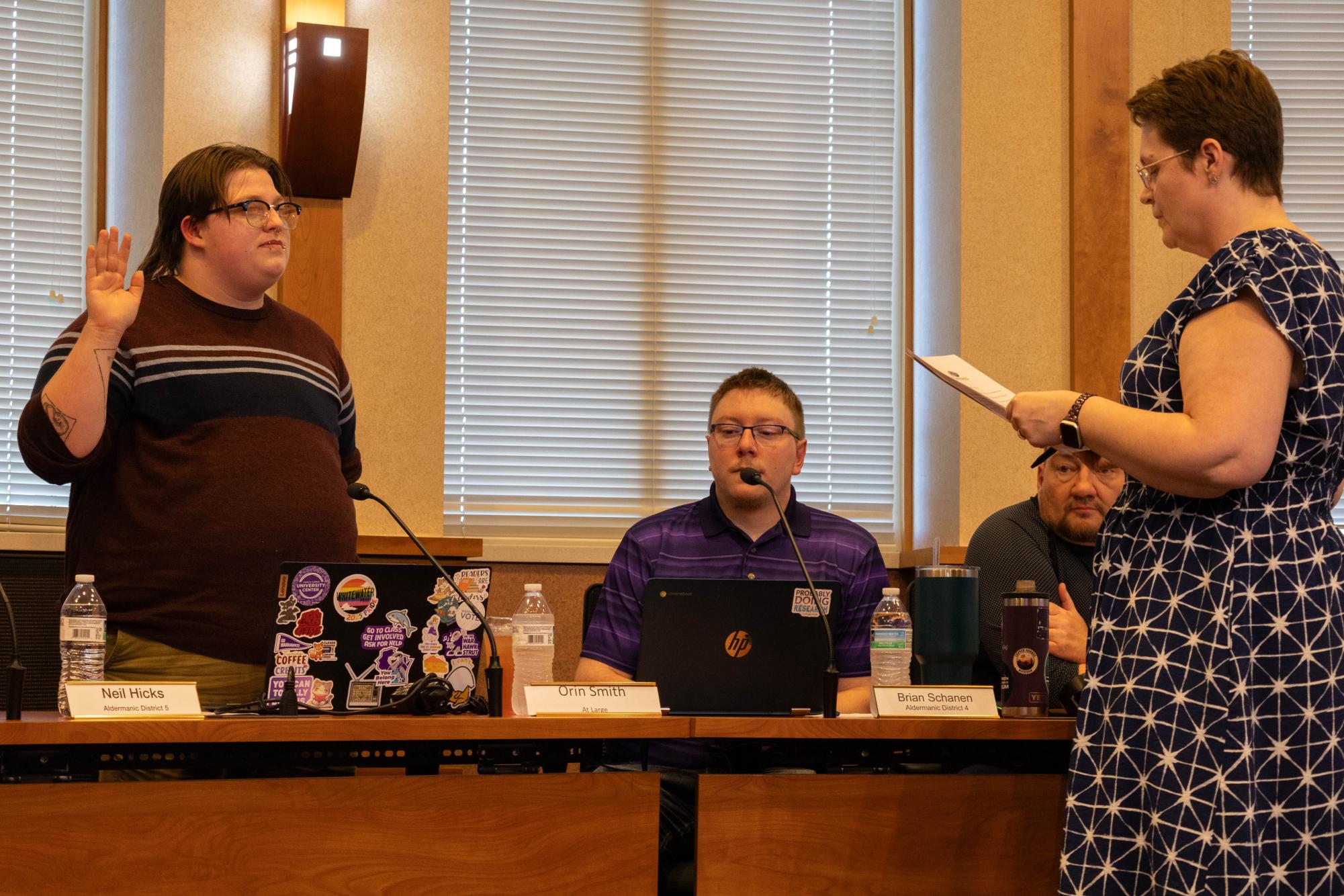
Gavin Kelleher won the District 2 seat during the April 7 election and joined the council for the first time during the April 20 meeting. Kelleher, Schanen and at-large Alderman Orin Smith were sworn in during the meeting.
During the Parks and Recreation report, Parks and Recreation Director Kevin Boehm commented on the cost of maintaining spaces used by local nonprofit organizations.
The Whitewater Community Food Pantry currently uses the second floor of the Armory building. Elevator maintenance at the Armory has caused issues for the Parks and Recreation budget. Since June 2024, the elevator has had $4,023 worth of repairs. Boehm said the repairs were caused not only by frequent passenger use, but by transporting materials using carts and trolleys for pantry operations.
To solve this problem, the Parks and Recreation Board advised the Common Council to move the Food Pantry to the kitchen space on the first floor of the Armory building, which is two-thirds of their current space. As pointed out by Schanen, this would also provide greater accessibility. If the city were to continue with this, it would involve the cost of removing existing cabinets and providing an individual electricity service — or a meter that the city would check, as Boehm suggested.
In addition, the Parks Board recommended creating a process for leasing city spaces. Right now, the city pays for all costs associated with these spaces.
“Should we continue to modify a recreational facility to meet the needs of an outside agency?” Boehm said. “The reality is that if we give them free rent, utilities or both, as it is now, is that subsidy [with] taxpayer dollars?”
Ultimately the council chose to recommend the Parks Board to defer any revenue collection from the Pantry and to work towards a policy for occupancy of the first floor.
Both Common Council meetings recordings, agendas and packets are available on the city’s website. The next Common Council is May 5 at 6 p.m.